Showing posts with label social media. Show all posts

Friday, 27 March 2015

Slaying the Giant: How to Beat Facebook's Algorithm


Facebook has done it again. Two months ago they stated that they would cut off Organic Reach for business pages. Then last month they announced that Facebook would change on March 12, 2015 the way Likes, Comments and Shares were tracked and that there would be less of them. It is unclear how you can count a physical action and come up with two different answers, but apparently Facebook can and they decided the number is going to be less. But never fear there are always opportunities for smart people that are willing to do the work. Facebook wants us all to take the easy route, the paid advert route, but that is a slippery slope with no possible chance of return.


Defying gravity:

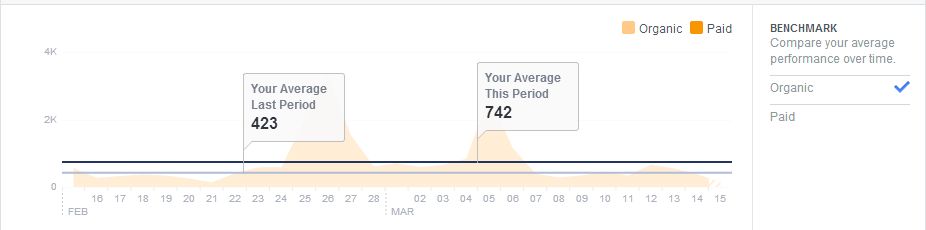
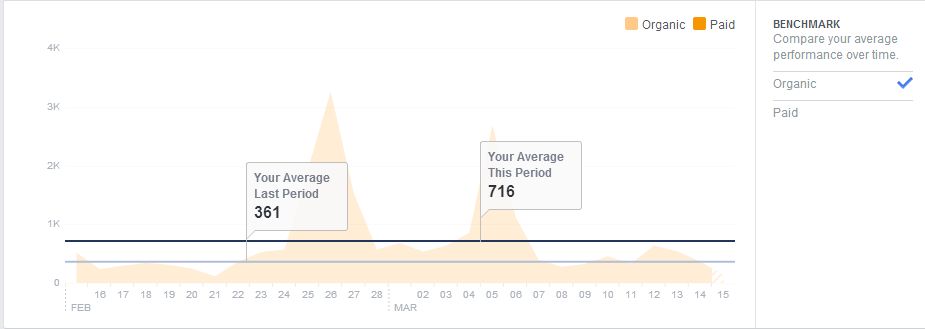
March 12 the big Doomsday for Likes, Comments and Shares which are the primary factor that influences Reach came and went with little fanfare or scary happenings. In fact a local client of PRDA showed significant gains before and after, actually defying what was assumed to be the inevitable

Post Reach
EA FB  Post Reach March 2015.JPG

Total Reach

EA FB Total Reach March 2015.JPG


So how do you accomplish this?

Social media has become more science than social over the years and this has never been truer than now. To filter through the enormous amount of content the algorithms in social apps are becoming ever more complex to select what you might like to see best. There is also the issue of money and the increasing focus on paid advertising for revenue. Between these two forces it is almost impossible to achieve good views anymore.

But it can be done!!

SEO tricks of keyword optimisation, formatting and proper publishing at the right time of day can trigger the algorithms. PRDA works hard to determine what these triggers are and how to make them work for our clients. But if you are not an expert at SEO and social message optimisation then I recommend using advertising in a limited way. Putting small amounts of money behind a variety of your posts will help you achieve your reach goals and it will start to tell you what performs the best. Here is an example:

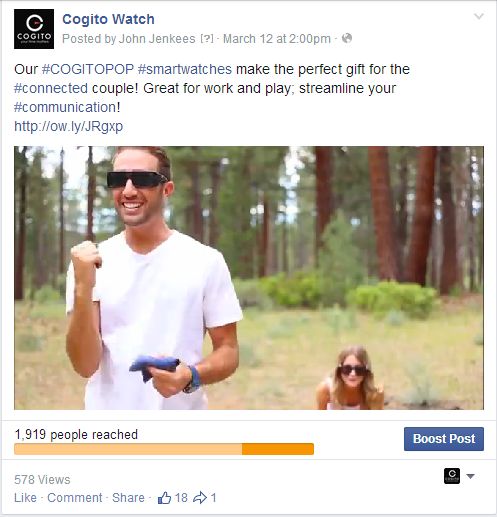
This client had a reach of 100 or less for each post. This was disappointing as it has 100,000 Fans. Something was not right. We started writing a range of different message and image combinations and put a small advertising budget behind them. Four different posts US$1.50 per day and this is what we achieved.

With an amount of about US$0.80 per day and optimised messages we increased the reach to 18,000 with the majority coming from Organic. The combination of good Organic methods and a small money boost made it shoot up. Facebook liked the fact we spend money, their algorithm like the content and between the two we got huge bonus value.

CND organic and paid reach FB post March 2015.JPG


Summary:

Over dependence on any one strategy is not always good. Trying to beat the system by tricking algorithms is time consuming and risky if you are not experienced. Sticking to paid advertising is a one way path to endless payments. Try balancing strategies to see if the sum of the parts is greater than the whole.

Much success,

Doug
www.PRDA.Asia

Wednesday, 28 July 2010

Social Media: How to destroy your brand on a budget

I get it, not everyone has social media figured out yet. But really breast feeding Tele Tubbies? There is no excuse for taking fabulous brands and make them look like they belong in the discount bin at the dollar store. Rule 1, if you are running a company do not leave your social media strategy to your teenage nephew, unless of course he happens to be Mark Zuckerberg.

Let’s take a look at some factors that make a solid social media campaign and compare them against a recently spotted Facebook page debacle. We learn from both our mistakes and the mistakes of others, and the Cotai Jet's Facebook page is a real learning opportunity. Cotai Jet is the flagship ferry service for Macau tourism, the Venetian and the Four Season's.

  1. Content - “is king!”. Just like you would have a party and not forget to bring music, food and drink you should not create a social media destination like a Facebook page and not have a content strategy in place to ensure a fresh stream of interesting and engaging content to your fans. Communication strategies are foundational.
    1. Really is this the best you can do? Macau is the playground of Asia and the Cotai Jet is the chauffeur for such luxury properties as the Venetian and the Four Seasons. A place that brings you Lady Gaga and the Gran Prix can’t come up with some pictures? Everybody has something interesting to share, except Macau apparently. . .


  1. Engagement/ moderation - If you think you are special enough to attract fans then you should be prepared to sign autographs! Talk to your fans! You are a superstar because of them, don’t forget to mingle and have your moderator be appropriate.
    1. Who would you pick as you moderator? Well it appears that Macau likes Tinky Winky and Tinky Winky like to breast feed. It appears that Tinky Winky has almost no friends and only likes to engage in lactating behaviour. Who am I to judge, but really???

  1. Authenticity - All aspects of a social media campaign need to ring true. It is very easy to detect Bullsh*t and fans do it faster than anyone.
    1. 154,542 friends for Tinky Winky the breast feeding TeleTubby (copyright infringement?) is a bit of a stretch. Considering there is no content or real conversation on the page this looks more than a bit suspicious. There is a reason that Indonesia has the 3rd most registered number of Facebook users. They are called friend farms. Yes, just like hookers you can also buy Facebook friends. And also like with hookers you probably don’t want your real friends, fans and customers to see you with them. Facebook pages are for real fans, keep your “paid dates” private.

  1. Brand appropriateness - any social media campaign needs to align with the Brand. A significant contribution of any professional social media agency is to help their client find their “voice” online and to responsibly extend the brand into social media spaces.
    1. We have discussed a number of issues with this page that call into question the appropriateness of the branding. It is difficult to imagine that the management of any of the Macau brands have reviewed or actively participated in this campaign. Like with any media campaingn, management buy in and support is critical to a successful social media campaign.

  1. Just doesn’t suck - social media offers so many opportunities to do real cool stuff. Your page may not be the best, but there is no reason for it to suck.
    1. Social media is quickly becoming the most important medium for brands to project themselves to their customers. However, it still seems it is not taken seriously. I feel there will be many more lessons to learn from before many brands get it right.


PRDA has been helping brands find their voice online for years. Our mistakes are behind us to ensure yours are not in front of you.


Much success,

Doug

Thursday, 22 July 2010

Social media: No obstacles just road signs

China is a unique place by almost every measure. They have their own way of doing things for sure. When managing social media or attempting to quantify consumer behaviour it is not wise to reference other country data to base your assumptions. An article, economically titled "China: An Update" by Yuping Liu-Thompkins, Ph.D provided a tidy summary of China consumer differences. She highlighted several trends that are of particular interest, and maybe not that much different from rest of world.


Grouping -- This is a advertising/sales technique being used by an emerging type of online sites. They offer discounted products to persons (or groups or persons) that register on the site or perform some other task. In exchange for surrendering their personal details or participating in a small marketing activity such as filling up a form or posting a brand message to their social site wall, they get a discounted price. A win win situation for all. The discounted price is not a loss for the business and in exchange the business gets an expanded database or their brand promoted online.

Cash instead of cards -- Yuping describes the unique set of conditions in China, e.g. low labour cost, long history of shipping goods to villages and a cash based economy to detail how COD (cash on delivery) is more effective and less costly than online credit card transactions. A very different way of doing business that may make many Western businesses nervous, but it works.

The lessons we learn when we take the time to really listen can be very rewarding. There is not one solution to every problem and when using social media that crosses so many borders it is critical to be aware. There are no obstacles only road signs keeping you informed along the way if you are so inclined to notice.

PRDA has been delivering successful social media programmes in Asia for many years. With hundreds of successes we have learned well the unique and wonderful tapestry that is Asia. Look to experienced professionals to reach your fans.

Much success,

Doug

Tuesday, 29 June 2010

Social media: The fans win

There has long been speculation and gut instinct that social media produced ROI. However despite many promises of being able to track online behavious accurately, there has been few statistics come forward. This has been primarily because of the weak link between online content and point of sale. However, this gap is quickly closing as brands pour more and more budget into digital and expect to see results. A recent study by Syncapse and reported by Haysam Fahmy in the blog Asia Digital Map shows, what all of us had thought true for a long time, people who invest energy in becoming fans of a brand in social media tend to spend more, be more brand loyal and are more likely to be brand amabassadors. Social media does payoff and in a big way.

Fans spend more!

On average a Facebook fan will spend almost US$80 a year more on a product than non-fans


Fans share more!

The most intreguing aspect of social media is converting customers to brand ambassadors. Fans of brand are 40% more likely to share brand information. This is powerful marketing.


The long and the short of this is that brands now have definite proof and measurement tools to show the clear value of social media. What is done with this is yet to be seen. Social media is still largely unknown and only few companies like Prosperity Research have the expertise to navigate social media effectively.

Wednesday, 2 June 2010

Social Media? 12 reasons plus 2 more

Social media is becoming an undeniable option for business. Some are still uncertain why or how they should use social media, but the tidal wave of users make the need to move into social media fell like a "must do". Fortunately there are good reasons and this article released by Social Media Today provides a compelling argument. Social media budgets are exploding and according to the author there are 12 reasons to jump in. That alone should be enough, but I can think of at least 2 more to add to this list that make the value proposition impossible to resist.

social media spending 12 Reasons to  Use Social Media to Grow Your Business


  • Listening -- the single greatest differentiator between social media and traditional is the opportunity for engagement. To be able to receive customer comments and product information in real time is extremely valuable. Traditional media can not provide this. Brands that recognize the value of receiving customer engagement and leverage this will outpace their competitors.
  • Community building -- social media is about community building and engaging customers. Many brands are still stuck in the "broadcast" mode of communicating and missing the great opportunity for becoming "friends" of their customers. When the shear volume of information that is pushed out into social media each day, the idea that someone "chose" to listen, opt in, comment on or subscribe to your message is remarkable. Once you have their attention, it is best not to lose it. Treat them well.

Social media is all about being "Social". The most successful brands recognize this. Brands that let their ego go for a bit and truly focus on their customers will enjoy success.

Much success,

Doug

Prosperity Research helps brands find their voice online. PRDA has significant experience and can help businesses find the value in all the
commotion.


Technorati Tags: , , ,


Monday, 17 May 2010

Community Power in Social Media Crisis

It is with both sadness and joy that I write this blog. Sadness because a favored client has had to shut down suddenly under difficult circumstances leaving many people in confusion and uncertainty and joy because I have seen the community created around this client come together with amazing strength and grace to support each other.

As one of the first social media experts I have found myself in the mix of many social media crisis situations. By nature of the term "crisis" they are not pleasant. But they can, if managed well, be an opportunity to show the true strength and power of social network communities and result in positive outcomes.

I watched these events unfold over the last days and was frustrated by the traditional media and their lack of help. Officials and commentators provided rehearsed statements, finger pointing and platitudes without opportunity for question provided little help. It was online that solutions were found and people found the support they needed.

This current "crisis" is about Planet Yoga, a yoga studio that had been operating in Hong Kong for over 7 years. Over that time they had developed a long list of members past and present. When we started working with Planet Yoga they had virtually no online presence. We built up a strong Facebook community of over 7000 fans that allowed their ardent yoga members a place to communicate and share outside of the studio. During the creation of the community we had no idea of the full value of this community.


Shock:


On May 13th at midnight Planet Yoga closed their doors abruptly and without prior public notice inline with rules of liquidation. Legally Planet Yoga needed to stop all communication and use the liquidation company for all further communication. However, a channel still existed that could be left open for their members to access information; Facebook.


Realization:


Facebook quickly became the focal point for the Planet Yoga members to share emotions and information. Another Facebook page was opened but it did not gain the momentum that the original page had.


Anger:


Hundreds of members offered support and consolation and expressed frustration and anger in many messages. But what was most compelling was the strong sense of community and the quick transformation of the page to a place to share and test information.

Members quickly assembled information and made it available. They set up emails and hot lines and organised off line meetings. The information found out by one was quickly shared to all making the process of finding solutions much more efficient. I watched this transformation happen quickly. In less than a day members had worked through issues and created great momentum in finding truths and support.


Solution:


Traditional media will have a place in our lives for a long time to come. I personally hope it remains, as it provides a "stake in the ground" from which to measure other efforts. But it is clear that social media is where people increasingly turn to find the truth.


Much success,

Doug

Wednesday, 12 May 2010

Social Media: Mind blowing stats counter

We are all very much aware on the fast pace of social media. We usually think of it in terms of people around the planet. I came across this in Social Media Today. It is a social media stats counter created by Gary Hayes at Personalize Media. Whether you are a numbers geek or just trying to better understand social media and social networks, this widget is a great motivator.


Much success,

Doug

Tuesday, 6 October 2009

SMN, Business and consumers see things very differently

Why is business so hesitant to enter social media and social network spaces (SMN) despite the strong encouragement of consumers? Consumers love SMN. Facebook has grown to the size of a large country and China now hosts more social network profiles than North American and Europe combined. Consumers have clearly voiced for some time that they want business to be part of this space.

Mike Sachoff wrote in WebProNews


Not only do consumers want brands to be active participants in this SMN but they, in repeated surveys, have stated that they have greater confidence in brand messages received in SMN then any other source than family and friends. Given this it becomes particularly odd that business still shows such reluctance.

Thomas Crampton

So what is it that is keeping business away from SMN? Well there are a number of reasons but the one that seems to come up most frequent is "we are afraid of what people will say about us". Ms. Ochman recently wrote what she found to be the

BL Ochman, reposted in socialmediatoday, wrote


The reaction of business to avoid SMN has both logic and contradiction in it. The logic would suggest that by putting yourself in SMN then you open yourself up to comment. This only stands to reason. However, the contradiction is that consumers will and are discussing brands in SMN regardless of whether business is there or not.

If you consider the old adage "the opposite of love is not hate it is indifference" then the only thing worse than having consumers saying bad things about your brand is having them saying nothing at all.

My personal belief, after having talked to many clients about this concern of theirs, is that it is not based on fear but denial and lack of understanding. I say denial because there is the illusion that if business sticks to traditional marketing strategies then somehow they will go unnoticed in SMN. This is not the case at all. The only result of this is that brands miss the opportunity to know what is being said of them and to actively choose how to respond. So it begs the question for business; what would be considered worse? To find out consumers are speaking ill of your brand or that they are saying nothing at all?

Much success,

Doug

Monday, 17 August 2009

Social Media case study: Broadcast vs. Engagement in forums

There is a lot of discussion going about these days about the difference and effectiveness of broadcast and engagement styles of marketing.

Broadcast is the bastion of old school marketing. We still see it used extensively in the new "social media" arena primarily because it is less expensive, familiar and to some degree effective. However, if social media has a mantra at all, it is "engagement".

Engagement is the "social" part of social media. Where two individual (even if one individual is a multinational) can come together and converse. This theoretically creates a more powerful bond between consumer and brand which then compels (or propels) the consumer into spreading the brand's joy far and wide with no further motivation than the satisfaction of "engagement".

Well is there any truth to this? I for one sure hope there is. I have never been a fan of advertising and I am one of the biggest proponents of social media.

We conducted an 8 week longitudinal study testing the effectiveness of broadcast vs engagement marketing techniques in forums and on Twitter. This is an "early days" study, and so the experimental design is rough. Below describes the Forum study, the Twitter analysis will be presented at another time.

Over an 8 week period approximately 200 forum entries were posted to over 150 different English language forum sites each week. For the first 5 weeks a broadcast technique was used. On the 5th week through the 8th an engagement technique was introduced. There was no activity during the 6th week due to client review. The broadcast technique is described as:

  • Threads were created using statements (not questions)
  • Forum entries were written as a product message without intent to initiate a conversation or get opinion. There purpose was to deliver an informational message.
The engagement technique is described as:

  • Threads were created as questions so as to elicit a response
  • Forum entries were written in a conversational manner. Not all entries contained brand messages
  • Replies to comments from readers were followed up and brand messages were included when appropriate
  • The brand message was included at least once in all conversations

Results:

During the first 4 weeks of pure broadcast the view rate remained low in relation to total number of posts. What is most telling is that during this period there were no comments left on any of the forum entries despite the approximately 5000 views.

Engagement was introduced in week 5, however with week 6 being a temporary suspension of the campaign the effects were not reported until week 7. There we can see a significant effect. The view rate shot up to almost 3 times previous counts without increasing the number of weekly entries. But the most significant finding is the comments. Comments, which were absent from the broadcast phase now represented almost 10% of the view rate.


Whereas it is too soon to make judgments about the effectiveness of engagement over broadcast based on this limited case study, it is clear that there is a definite change in behavior which can be seen in both increase in views and more importantly comments.

Much success,

Doug

Monday, 10 August 2009

New (old) digital model: burning down the house

This last week Prosperity Research achieved its final milestone of creating a purely distributed business model. We brought down our website, www.SO-U.TV. Yes I know it sounds so archaic to talk about websites when social networks, mobile computing and Twitter are all the rage. However, it has taken four years to get out reluctant clients to live with out its reassuring presence. When Prosperity Research was established we came up with the simple idea; it is easier and cheaper to go to your consumers than to get them to come to you. At least this is true in the digital world. We saw social media coming and bet right.

Think of a website as a home, one that you can never leave. This is a romantic thought, but imagine the constant maintenance, lifetime mortgage, and since you can not leave you must spend huge amounts of time and money to attract and entertain your guests. Also, if the house needs remodelling or repair the cost can be excruciating.

Reference:Adam Broitman sez 4 reasons web sites are becoming irrelevant

Now imagine if you could live anywhere you wanted rent free. If you tire of someplace you can quickly move to another more attractive and spacious one. You can live in as many places as you like and spend as much or as little time as you like. You always have lots of friends around and someone else always pays the tab at the end of the party. Too good to be true? Not really.


It is called distributed marketing and whereas we started down this path more than 4 years ago it is just now starting to come into its own. Social media marketing is a similar concept and better understood. So putting it in the context of social media marketing, it is simply using "free to post" or consumer generated content areas of sites such as YouTube, Facebook, Twitter, Linkedin and more to host your content and conduct your business.

To prove the coming of age of distributed marketing and increasing acceptance of social media, David Ketchum of Upstream Asia was featured in an article recently discussing the huge discrepancy between how business uses the Internet and how consumers use it. Consumers have quickly adapted to distributed marketing and are head over heels in love with social media. So why isn't business? He states that business needs to start fishing where the fish are. Three years ago we coined the phrase "put yourself in the path of your consumer". Not quite as folksy sounding but the same concept.

BTW, www. SO-U.TV is not completely gone. You can find us on 100's of sites and if you feel nostalgic for an old fashioned website, we kept a bit of our past on Ning.com. Come join us!

Much success,

Doug

Thursday, 23 July 2009

Social Media Success: China video sites critical factor

It is well understood that consumers are viewing a significant amount of video online. It is quickly becoming the CMO's media of choice for online marketing. However, creating a video is not in and of itself sufficient to make it successful. There are many variables that can effect the success of online videos. This post focuses on social media video views based on hosting location and the top sites from data collected between December 2008 and May 2009. The two main locations where consumer uploaded video is hosted are China and US/Europe.

The videos tracked were part of social media campaigns launched by Prosperity Research for a range of clients which include fashion, sports, legal, charities, hospitality and many others. During the period from December 2008 to May 2009 101 videos were released. The majority of the videos were English language videos with Cantonese and Mandarin subtitles. The break down of number of Chinese and US/Europe video hosting sites were about equal at 24 US/Europe and 22 Chinese. After review, sites with negligible views or were closed during the study period were excluded. The remaining sites totaled Chinese (18) and US/Europe (19).

The videos were posted to the sites using the same title and description across all sites. The only differentiating factor was that on Chinese language sites the title and description was translated into Chinese. The views tracked were those recorded by the site. This study makes no claims to the accuracy of view counters on these sites with one exception. The China site www.9mv.com recorded view rates that appeared too exaggerated to be accurate and the site was eliminated from the analysis.

The two comparisons of video views are a comparison of total views during the period on the sites included in the study. The second comparison of views on the top 3 sites from China and US/Europe.

Total views of videos by location:


Top viewed sites for China and US/Europe


Summary:

The results of the analysis provided some surprising information. The expectation was that the US/Europe sites hosting predominately English language videos would receive the majority views. However, the China sites significantly outperformed based on number of views. There was also the expectation that popular China video sites www.youku.com and wwww.tudou.com would have been top performers but they did not make the top 3 spot for China. This first analysis does not provide clear reasons on why China video views outpace those of US/Europe at this point, but the results clearly point to the importance of China video hosting sites as a critical component of a social media campaign.

Monday, 18 May 2009

YouTube a distant 3rd: Behind Facebook and MySpace

Surprised! Not really. Last week I wrote a blog, Social Sites a whimper or a Yell!, on the 3 stages that a social site must go through to be successful and not linger or fail. I pegged YouTube as having failed to successfully reach the third stage. This week Hitwise released data confirming my theory. I find no satisfaction in being right on this point. YouTube is a hero in my book. This application revolutionised communication by allowing free and unlimited sharing of videos. The world opened up in a way never before imagined. This was not a "me to" application, but a real revolution. But that said, if it wasn't for the deep pockets of Google it may not be around today. Why?


The 3rd important stage a viable social media/network site must evolve into is "Strong and Stable". This is recognised as the phase where the social site adds value to the end user and through this enjoys a stable user base and is able to generate revenue through channels aligned with the sites business model. There is no question that YouTube is widely used. YouTube videos can be seen everywhere. It is currently estimated that 67% of online videos streamed are through YouTube. But what does this really mean? It all seems OK but is it really?

The difficulty with YouTube is that it lacks functionality that bring people in and holds them. It is my guess that we all view more YouTube videos on Facebook or embedded on other websites than on YouTube itself. There are few, if any, functions on YouTube that make it an enjoyable experience for anyone other than those posting and managing their videos. So how does a site with enormous infrastructure costs that are disproportionate to their member numbers survive. This is the conundrum for YouTube. Whereas, Facebook and MySpace have evolved to make their sites a destination, YouTube seems to being moving further away from this target goal while providing no revenue stream to fill the gap. At this point I could paint a disappointing picture that YouTube will fall back on old school tactics of forced in-video advertising and possibly paid hosting. I hope they arrive at a more innovative and less intrusive solution, but I am not optimistic. In the mean time I assume they will continue to reach ever deeper into Google's pockets.

Saturday, 9 May 2009

Social Sites: A whimper or a YELL!


YouTube, Facebook and Twitter. All are in the press these days and if they are not part of our lives yet they probably soon will be. So how do they fare when judged against "what makes a successful social site"? Let's have a read:


Social sites have been around for some time now. And in that time I have had a chance to observe some fairly standard activity that either leads to success or obscurity for social sites. Keeping things simple, there are 3 phases that a social site needs to survive and there are 3 groups of people that will help to make or break it.

Phases:

  1. Fad and Frenzy -- everybody jumps on board. Vampire bites and hours of endless surfing with no real point or reason. This is a very important phase for a social site.
  2. Get Real -- Rapid fall off of people as they realise that they are completely wasting their time on what seems to be a senseless and all consuming past time. Use and tools need to get sophisticated to retain interest.
  3. Strong and Stable -- Innovation leads to value. People recognise useful tools and ability to make time work for them and not take time from them.

Groups:

  1. Time wasters -- These are usually the first on an application and the last to leave. With hours of endless time to waste, they are usually the ones that push the next group off because of persistent annoying behaviour.
  2. Convince me -- These are the people that tentatively join after a bit of coaxing but do not get caught up in the craziness and drop off quickly. However, these are the core group that will return if the app makes it to the 3rd phase.
  3. Innovators -- These are the people that see the future. They transcend the silliness and ego that drives social sites in the first two phases and can recognise the long term potential. They develop the apps that turn a "waste time" app into a valuable tool.

Three very well know social media apps are YouTube, Facebook and the up and coming Twitter. Each of these represents various stages of the 3 phases.


YouTube (no success yet) was the most promising. With its explosive launch and unique offering – VIDEO, YouTube set the world ablaze with imagination. YouTube provided us with a new world of choices, new ways to share and hours of good fun. YouTube enjoyed one of the most explosive Fad phases of any social media application to date. However, since that time they have not been able to transition to the Strong and Stable phase. YouTube has not come up with a solid business model that provides long term profitability. My comment to my clients is that YouTube is a good platform for them to host their videos free of charge. But it is lacking as a good marketing tool and their poor search capability and overwhelming amount of content makes it almost impossible to use with out additional help outside YouTube. Without the deep pockets of Google supporting YouTube they most likely would not be able to continue. The cost of supporting their services is too prohibitive without a legitimate revenue model.


Facebook, despite the occasional bad press, is a poster child for success. It grew at meteoric speed and then faced intense pressure to retain viewers. Exhausted by vampire bites and inane gifts, the “convince me” group started to leave in droves. What made Facebook greatly successful is that the Innovators were able to see long term value in the deep connections that Facebook allowed. This ability to manage connections whether they are friends, events, social media or virtually any other had huge value. Facebook matured into a good personal management systems. With its attention to small business and organisations, it opened itself up to limitless content creation. The ability for individuals to filter and minimise unwanted communications makes it very attractive. It is almost impossible to eliminate spam from your email, but with Facebook you only see what you want.


Twitter is the up and coming new Social App. The hype is huge and people are logging on and jumping off in droves. However, the innovators have clearly identified Twitter as possessing great potential. The question is will Twitter successfully make it through the final Strong and Stable phase? I am betting it will.

Tuesday, 28 April 2009

How Social Media changed advertising

Social media has changed advertising. Advertising has, since its inception, held a dubious position within society. For example, when we watch TV or view a web page we consider it "what pays for the stuff we like". However, there are those of us that buy magazines just for the ads and the Sunday paper is filled with shopping specials. But, by and large, it is what is passed by for more interesting content. I have written a number of blog posts on this topic. I have over the past several years written several blog posts about advertising's diminishing effectiveness with consumers.

Advertising is diminishing in effectiveness largely due to explosive growth of Social Media and Social Networking. Never before have consumers had such control over brands. And consumers do this without constraint. Social Networks allow for free and unhampered communication and connection. How can advertising compete with all that fun stuff flying about?


Well, Rich Cherecwich of Imedia Connect has an interesting solution; make advertising look less like advertising. This is a good step forward. At Prosperity Research we have avoided the advertising dilemma by been using video based social media marketing strategies with our clients for years. Consumers appear to be very willing to engage with brand messages provided those messages add value to their lives and are interesting. it is all about being relevant.

How about the value of video based social media. Well a recent article from Clickz.com made the generous statement that video was a good bet in a recession -- probably one of the most effective and affordable methods to reach and retain your consumers.

Much success,

Doug

Monday, 20 April 2009

Social Media slams Banner Ads 2 to 1


Social media's superior effectiveness over banner ads is likely attributed to 2 factors:


  1. Brand information found on social sites is the #2 most trusted source of brand information, second only to family and friends.
  2. Social sites are growing at a rate of 2:1 over all other internet areas making them the most active areas of consumer to consumer (C2C) conversations.

http://www.emarketer.com/Article.aspx?R=1007050

Brand Mentions Preferred over Ads - eMarketer via kwout

Industry information has been pouring in for more than a year showing a significant decrease in the effectiveness of banner ads and traditional forms of marketing. Additionally we are all very aware of falling printed advertising value as more and more people use the internet as their primary source of information and entertainment. What this means is that marketers must shift their traditional perceptions of advertising and marketing and adjust to a new set of rules that govern digital marketing. 

  1. Social Spaces are powerful arenas for consumer opinion and they are democratic
  2. Generally, people do not like advertising and especially don't seem to like it in social spaces
  3. Consumers are sophisticated and trust each other more than businesses for brand recommendation
  4. Consumers have the ability to filter out unwanted noise; advertising is the first to get filtered
Marketing in social spaces definitely plays by a different set of rules. But if business recognises and respects these rules social spaces offer significant advantage for smart brands that can adapt.


Much success,

Doug

Wednesday, 15 April 2009

Consumers lead and business follows


With the exponential growth of social sites and the empowerment of individuals to create their own “15 minutes of fame” in the digital realm it is no wonder that businesses are starting to recognize the potential. Almost a year and a half ago I started writing blogs about this trend and at the time I was continuously puzzled by the lack of enthusiasm by business for this unprecedented opportunity. I thought that this was miraculous. You had your customers in a single place (social site), telling each other what they liked and willing to listen to what others had to say. It seemed like a marketing dream. Well business is finally catching on, if a bit late.

In our office we always knew that when business decided to jump on the band wagon it would be a huge and dramatic shift. Well it is happening and it surpassed even our expectations. Recent industry studies provide some startling, if not exciting, statistics:

  • Chief Marketing Officers in Asia and North America rate Social Networks, video and video sharing as their top priorities
  • 88% of marketers are currently using Social Media in some capacity
  • Over 90% of business owners are using Social Media

This begs the question; why are business owners more likely than marketers to be using social networks and media?

I think the answer to that lies in the nature of social networks and the democratic quality they afford. In social networks the consumer is king and each has a more or less equal voice. Where once tools of marketing were limited to those with skills or money this is no longer true. Anyone can use Facebook (over 200 million members) or YouTube and a camcorder. With these resources available, even small business can create masterful marketing campaigns with modest budgets and ability to reach clients with little concern for normally typical restrictions such as geographic location. Of course managing an effective campaign is always best handled by professionals so kids don’t try this at home, ha ha.

In summary what is known is that business is now catching up with consumers in social networks and media. Because of the ease of use, consumer control and democratic functioning of social networks and media, small to medium business are achieving good success in utilising these resources and this is clearly seen in the industry statistics.

Monday, 30 March 2009

Data Driven: Video 8 :1 over Banner Ads

The data is in from Adtech. 10 billion clicks were counted from across Europe and what early analysts predicted is now being proven true. Banner advertising is on the decline in effectiveness and video is on the rise. Banner advertising CTR has fallen from .4% approximately a year ago to .2% at the end of 2008. Whereas video continues to gain the consumer's attention with an average CTR of 1.7% and climbing. This is 850% better than traditional banner advertising.


http://www.emarketer.com/Article.aspx?id=1006969

The Latest Ad Click Count - eMarketer via kwout


Additionally, video use on commercial websites is quickly approaching 100%. A recent survey of vertical sites showed that, on average, 79% of sites surveyed where using video. 59% had it placed on their home page. A number of factors is motivating this movement. The first is technology. Streaming video no longer places a burden on infrastructure and many SaaS provide hosting often for free. Second is that video is a powerful communication tool. It captivates and engages more effectively than print or still images by engaging several senses at once with the attraction of movement.


It should not come as a big surprise that people enjoy video. We have been captivated by movies for a very long time and most of us were raised by TV. It only stands to reason that it would become our online communication tool of choice.

Friday, 27 March 2009

Social Media: Playing to the strengths of People

It has been long known that different people learn in different ways. In university psychology these "different ways" were called modalities. We all know that some of us prefer to read while others can listen with precision and others prefer waiting for the movie to come out. This is one of the great flexibilities of social media; it can be all of these and more. Additionally, improving the impact of a message can be greatly enhanced by delivering the message in different ways at the same time. Example: mixing pictures and text or video and subtitles. In a recent study a huge increase in viewing time of videos was demonstrated by adding subtitles, mixing video and text.


When we think about it, most of us know this makes perfect sense. Demonstrating once again, that going back to our psych 101 text books can give insight into the workings of social media. Much can be gained by understanding people. After all Social Media is about "Social". We as an industry do not need to be Psychologists or University professors to figure this out. It usually is no more complex a problem then looking to our friends, family and ourselves to see what they "are doing". Often we will find a discrepancy between what we want to believe people will do and like and what is the real situation. After all we all want to believe that the work we produce is the best. However, in real life, probably only our mother will love it without question and for everyone else the jury is still out. Pragmatics is the success to Social Media. KISS.

Much Success,

Doug

Tuesday, 24 March 2009

Social Media Example: Global Real Estate Investment

IP Global's Managing Director is very charismatic and knowledgeable when it comes to international real estate investing. It was a logical fit that he should utilise video to fully capture his compelling delivery of current real estate investment insights.

IP Global has a long standing in Asia as a premier real estate investment group by creating wealth through sound real estate investments for their clients. With ever increasingly geographically diverse investment opportunities and an increasingly mobile investor group, moving their messages online seemed the right choice. Starting with a redesigned website that provided deeper information was a first start. But to relay timely information to clients a podcast was recognised as a highly effective tool.

IP Global is looking to produce regular updates of their investor podcasts to keep their savvy investor base up to date with economic and invest information in a manner that is quick, concise and portable.

Below is the first podcast released to the public. It was posted across a large number of strategically targeted Social Media sites to ensure that what sites their investors are most comfortable viewing their information they will be readily available to them.


Sunday, 15 March 2009

Social Media Monetisation and equivalent media buy

There has been much talk on how to monetise social media marketing techniques. The amount of speculations does seem warranted based on the industry figures associated with social media marketing and the vast amount of money that potentially is up for grabs.

  • Growing at a rate of 2:1 over other internet activity
  • Second most trusted source of brand information
  • Video growing at 50% year on year
  • Video based marketing enjoys higher CTR
  • Digital budgets grow while print, radio and TVC shrink
If you operate a social media platform (e.g. Facebook or Twitter) the answer may be a bit foggy. But if you are an social media marketing agency the answer is clearer; equivalent media buy!

When discussing the costs and advantage of social media compared to other online strategies it is often about comparing apples to oranges. Social media is about engagement and consumer content, whereas paid search and display ads, SEO and SEM work differently. Making the argument for the benefit of social media can sound a bit esoteric when the bottom line is at stake.

However, if you engage in a results based discussion
  • Search engine results
  • CTR
  • Conversion
then an apple to apple comparison can be made against existing SEO, SEM, paid search and display ad budgets. So sell social media's clear advantage over traditional and familiar online marketing strategies where you can capture existing budget by proving equal or improved results instead of attempting to sell the "unknowns" of social media. Once the sale has been made then the additional value of social media will become immediately clear and evident and will sell itself going forward.

Prosperity Research has activated hundred's of social media campaigns and a summary of the finding shows a cost comparison against paid search and displays ads as:

Social medial campaigns average about US$ .12 per view/ click
Industry rates of .1% CTR for display US$ 1.25 per click
Average cost of key search term in 3-6 space US$ 1.00

In summary, our survey of campaigns based on apple to apple comparison of results show that social media costs can be significantly less than traditional forms of online marketing.