Showing posts with label Facebook. Show all posts

Friday, 27 March 2015

Slaying the Giant: How to Beat Facebook's Algorithm


Facebook has done it again. Two months ago they stated that they would cut off Organic Reach for business pages. Then last month they announced that Facebook would change on March 12, 2015 the way Likes, Comments and Shares were tracked and that there would be less of them. It is unclear how you can count a physical action and come up with two different answers, but apparently Facebook can and they decided the number is going to be less. But never fear there are always opportunities for smart people that are willing to do the work. Facebook wants us all to take the easy route, the paid advert route, but that is a slippery slope with no possible chance of return.


Defying gravity:

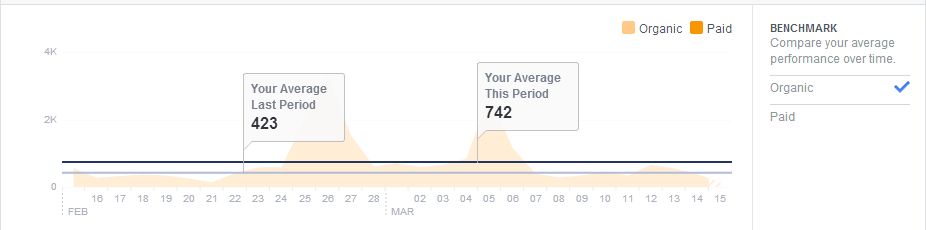
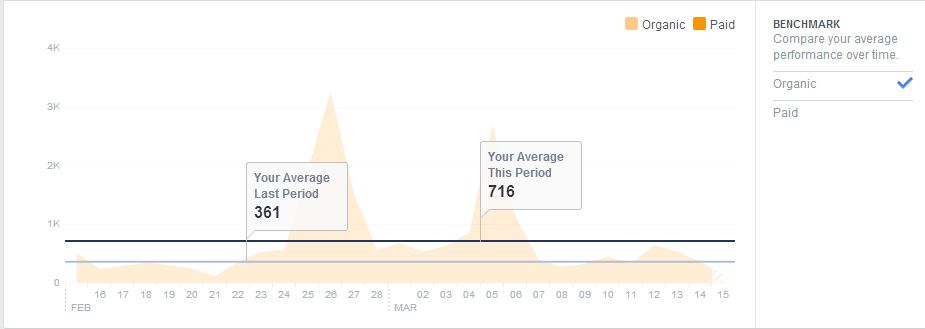
March 12 the big Doomsday for Likes, Comments and Shares which are the primary factor that influences Reach came and went with little fanfare or scary happenings. In fact a local client of PRDA showed significant gains before and after, actually defying what was assumed to be the inevitable

Post Reach
EA FB  Post Reach March 2015.JPG

Total Reach

EA FB Total Reach March 2015.JPG


So how do you accomplish this?

Social media has become more science than social over the years and this has never been truer than now. To filter through the enormous amount of content the algorithms in social apps are becoming ever more complex to select what you might like to see best. There is also the issue of money and the increasing focus on paid advertising for revenue. Between these two forces it is almost impossible to achieve good views anymore.

But it can be done!!

SEO tricks of keyword optimisation, formatting and proper publishing at the right time of day can trigger the algorithms. PRDA works hard to determine what these triggers are and how to make them work for our clients. But if you are not an expert at SEO and social message optimisation then I recommend using advertising in a limited way. Putting small amounts of money behind a variety of your posts will help you achieve your reach goals and it will start to tell you what performs the best. Here is an example:

This client had a reach of 100 or less for each post. This was disappointing as it has 100,000 Fans. Something was not right. We started writing a range of different message and image combinations and put a small advertising budget behind them. Four different posts US$1.50 per day and this is what we achieved.

With an amount of about US$0.80 per day and optimised messages we increased the reach to 18,000 with the majority coming from Organic. The combination of good Organic methods and a small money boost made it shoot up. Facebook liked the fact we spend money, their algorithm like the content and between the two we got huge bonus value.
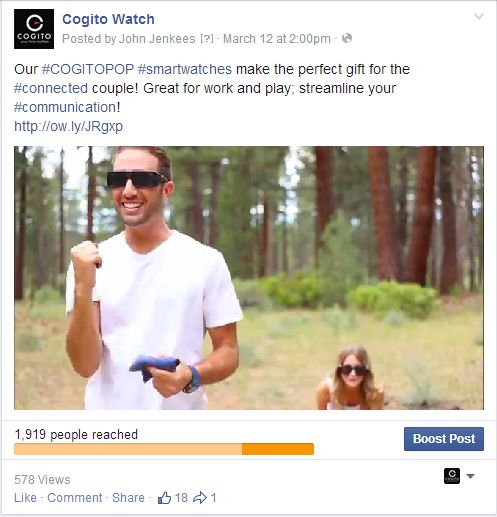

CND organic and paid reach FB post March 2015.JPG


Summary:

Over dependence on any one strategy is not always good. Trying to beat the system by tricking algorithms is time consuming and risky if you are not experienced. Sticking to paid advertising is a one way path to endless payments. Try balancing strategies to see if the sum of the parts is greater than the whole.

Much success,

Doug
www.PRDA.Asia

Monday, 10 August 2009

New (old) digital model: burning down the house

This last week Prosperity Research achieved its final milestone of creating a purely distributed business model. We brought down our website, www.SO-U.TV. Yes I know it sounds so archaic to talk about websites when social networks, mobile computing and Twitter are all the rage. However, it has taken four years to get out reluctant clients to live with out its reassuring presence. When Prosperity Research was established we came up with the simple idea; it is easier and cheaper to go to your consumers than to get them to come to you. At least this is true in the digital world. We saw social media coming and bet right.

Think of a website as a home, one that you can never leave. This is a romantic thought, but imagine the constant maintenance, lifetime mortgage, and since you can not leave you must spend huge amounts of time and money to attract and entertain your guests. Also, if the house needs remodelling or repair the cost can be excruciating.

Reference:Adam Broitman sez 4 reasons web sites are becoming irrelevant

Now imagine if you could live anywhere you wanted rent free. If you tire of someplace you can quickly move to another more attractive and spacious one. You can live in as many places as you like and spend as much or as little time as you like. You always have lots of friends around and someone else always pays the tab at the end of the party. Too good to be true? Not really.


It is called distributed marketing and whereas we started down this path more than 4 years ago it is just now starting to come into its own. Social media marketing is a similar concept and better understood. So putting it in the context of social media marketing, it is simply using "free to post" or consumer generated content areas of sites such as YouTube, Facebook, Twitter, Linkedin and more to host your content and conduct your business.

To prove the coming of age of distributed marketing and increasing acceptance of social media, David Ketchum of Upstream Asia was featured in an article recently discussing the huge discrepancy between how business uses the Internet and how consumers use it. Consumers have quickly adapted to distributed marketing and are head over heels in love with social media. So why isn't business? He states that business needs to start fishing where the fish are. Three years ago we coined the phrase "put yourself in the path of your consumer". Not quite as folksy sounding but the same concept.

BTW, www. SO-U.TV is not completely gone. You can find us on 100's of sites and if you feel nostalgic for an old fashioned website, we kept a bit of our past on Ning.com. Come join us!

Much success,

Doug

Monday, 18 May 2009

YouTube a distant 3rd: Behind Facebook and MySpace

Surprised! Not really. Last week I wrote a blog, Social Sites a whimper or a Yell!, on the 3 stages that a social site must go through to be successful and not linger or fail. I pegged YouTube as having failed to successfully reach the third stage. This week Hitwise released data confirming my theory. I find no satisfaction in being right on this point. YouTube is a hero in my book. This application revolutionised communication by allowing free and unlimited sharing of videos. The world opened up in a way never before imagined. This was not a "me to" application, but a real revolution. But that said, if it wasn't for the deep pockets of Google it may not be around today. Why?


The 3rd important stage a viable social media/network site must evolve into is "Strong and Stable". This is recognised as the phase where the social site adds value to the end user and through this enjoys a stable user base and is able to generate revenue through channels aligned with the sites business model. There is no question that YouTube is widely used. YouTube videos can be seen everywhere. It is currently estimated that 67% of online videos streamed are through YouTube. But what does this really mean? It all seems OK but is it really?

The difficulty with YouTube is that it lacks functionality that bring people in and holds them. It is my guess that we all view more YouTube videos on Facebook or embedded on other websites than on YouTube itself. There are few, if any, functions on YouTube that make it an enjoyable experience for anyone other than those posting and managing their videos. So how does a site with enormous infrastructure costs that are disproportionate to their member numbers survive. This is the conundrum for YouTube. Whereas, Facebook and MySpace have evolved to make their sites a destination, YouTube seems to being moving further away from this target goal while providing no revenue stream to fill the gap. At this point I could paint a disappointing picture that YouTube will fall back on old school tactics of forced in-video advertising and possibly paid hosting. I hope they arrive at a more innovative and less intrusive solution, but I am not optimistic. In the mean time I assume they will continue to reach ever deeper into Google's pockets.

Saturday, 9 May 2009

Social Sites: A whimper or a YELL!


YouTube, Facebook and Twitter. All are in the press these days and if they are not part of our lives yet they probably soon will be. So how do they fare when judged against "what makes a successful social site"? Let's have a read:


Social sites have been around for some time now. And in that time I have had a chance to observe some fairly standard activity that either leads to success or obscurity for social sites. Keeping things simple, there are 3 phases that a social site needs to survive and there are 3 groups of people that will help to make or break it.

Phases:

  1. Fad and Frenzy -- everybody jumps on board. Vampire bites and hours of endless surfing with no real point or reason. This is a very important phase for a social site.
  2. Get Real -- Rapid fall off of people as they realise that they are completely wasting their time on what seems to be a senseless and all consuming past time. Use and tools need to get sophisticated to retain interest.
  3. Strong and Stable -- Innovation leads to value. People recognise useful tools and ability to make time work for them and not take time from them.

Groups:

  1. Time wasters -- These are usually the first on an application and the last to leave. With hours of endless time to waste, they are usually the ones that push the next group off because of persistent annoying behaviour.
  2. Convince me -- These are the people that tentatively join after a bit of coaxing but do not get caught up in the craziness and drop off quickly. However, these are the core group that will return if the app makes it to the 3rd phase.
  3. Innovators -- These are the people that see the future. They transcend the silliness and ego that drives social sites in the first two phases and can recognise the long term potential. They develop the apps that turn a "waste time" app into a valuable tool.

Three very well know social media apps are YouTube, Facebook and the up and coming Twitter. Each of these represents various stages of the 3 phases.


YouTube (no success yet) was the most promising. With its explosive launch and unique offering – VIDEO, YouTube set the world ablaze with imagination. YouTube provided us with a new world of choices, new ways to share and hours of good fun. YouTube enjoyed one of the most explosive Fad phases of any social media application to date. However, since that time they have not been able to transition to the Strong and Stable phase. YouTube has not come up with a solid business model that provides long term profitability. My comment to my clients is that YouTube is a good platform for them to host their videos free of charge. But it is lacking as a good marketing tool and their poor search capability and overwhelming amount of content makes it almost impossible to use with out additional help outside YouTube. Without the deep pockets of Google supporting YouTube they most likely would not be able to continue. The cost of supporting their services is too prohibitive without a legitimate revenue model.


Facebook, despite the occasional bad press, is a poster child for success. It grew at meteoric speed and then faced intense pressure to retain viewers. Exhausted by vampire bites and inane gifts, the “convince me” group started to leave in droves. What made Facebook greatly successful is that the Innovators were able to see long term value in the deep connections that Facebook allowed. This ability to manage connections whether they are friends, events, social media or virtually any other had huge value. Facebook matured into a good personal management systems. With its attention to small business and organisations, it opened itself up to limitless content creation. The ability for individuals to filter and minimise unwanted communications makes it very attractive. It is almost impossible to eliminate spam from your email, but with Facebook you only see what you want.


Twitter is the up and coming new Social App. The hype is huge and people are logging on and jumping off in droves. However, the innovators have clearly identified Twitter as possessing great potential. The question is will Twitter successfully make it through the final Strong and Stable phase? I am betting it will.

Wednesday, 15 April 2009

Consumers lead and business follows


With the exponential growth of social sites and the empowerment of individuals to create their own “15 minutes of fame” in the digital realm it is no wonder that businesses are starting to recognize the potential. Almost a year and a half ago I started writing blogs about this trend and at the time I was continuously puzzled by the lack of enthusiasm by business for this unprecedented opportunity. I thought that this was miraculous. You had your customers in a single place (social site), telling each other what they liked and willing to listen to what others had to say. It seemed like a marketing dream. Well business is finally catching on, if a bit late.

In our office we always knew that when business decided to jump on the band wagon it would be a huge and dramatic shift. Well it is happening and it surpassed even our expectations. Recent industry studies provide some startling, if not exciting, statistics:

  • Chief Marketing Officers in Asia and North America rate Social Networks, video and video sharing as their top priorities
  • 88% of marketers are currently using Social Media in some capacity
  • Over 90% of business owners are using Social Media

This begs the question; why are business owners more likely than marketers to be using social networks and media?

I think the answer to that lies in the nature of social networks and the democratic quality they afford. In social networks the consumer is king and each has a more or less equal voice. Where once tools of marketing were limited to those with skills or money this is no longer true. Anyone can use Facebook (over 200 million members) or YouTube and a camcorder. With these resources available, even small business can create masterful marketing campaigns with modest budgets and ability to reach clients with little concern for normally typical restrictions such as geographic location. Of course managing an effective campaign is always best handled by professionals so kids don’t try this at home, ha ha.

In summary what is known is that business is now catching up with consumers in social networks and media. Because of the ease of use, consumer control and democratic functioning of social networks and media, small to medium business are achieving good success in utilising these resources and this is clearly seen in the industry statistics.

Wednesday, 10 December 2008

Facebook: Old and dear friends

The other day I opened facebook. Lately I find myself opening facebook even before my e-mail. On that day I can not remember which I opened first. What I did notice that in my Facebook inbox was a note from someone I had not heard from in almost 8 years, perhaps longer.

The note put a smile on my face and I moved the cursor to open it. The note was much less pleasant than seeing the name and face of an old friend. This person had found me after all these years through one of the few applications that allow this level of connection; facebook. They had used this tool to tell me that a mutual friend had died. This friend had been long troubled. Never seeming to find the support and connection with others that he desperately needed. I found this to be an odd paradox. Here we live in the most connected time in our history. We are able to chat, share and meet people most anywhere and anytime. We can have single purpose friends and carry on deep relationships just by tapping away at our keyboard. On one level none of us ever needs to be alone. And yet, with all this virtual connection we are above all physical beings. We need that level of connection that we can only get from the close proximity of another. I recently heard that as much as 90% of our communication is body language. If this is true then we can type away at our keybords all day long and still never be fully satisfied since what we miss is the unwritten message between two people. The quick unexpected smile and raise of an eyebrow can not be really represented in an emoticon.

Monday, 22 September 2008

From Print to Pixels or How Facebook Saved the Rainforest


How did Facebook save the rain forest?

Remember the idea of the paperless office? The technology that was supposed to transform the modern office into a ecologically friendly “green” office actually increased paper consumption by 40%, ouch! And like the office, print media continues to be the mainstay for most marketing campaigns, thereby creating a vast amount of waste that is difficult at times to justify. It appears our addiction to print is insatiable; or is it? A revolution is taking place that seems to be doing what no government, corporate or ecological initiatives could accomplish: Make our world paperless and green! What is driving this revolution? Simply, it is Social Networks.

“Facebook Saves the World”

The introduction of Social Networks has created unprecedented numbers of interpersonal connections and communications. People chat around the globe with strangers they now call friends. Social Networks are not a digitized form of old paper processes. Social Networks are not a virtual extension of their real world counterparts. They are their own creation and exist unto themselves. The methods of communicating, sharing and saving information are not based on paper driven models. This is the key to their success. Since Social Networks were created in the virtual world they do not have real world requirements to survive and flourish. It is this distinction that is bringing the printer to a stand still!

So what to do without paper?

Not surprisingly people seem to get on just fine without a big trail of paper. And not surprisingly, most businesses don’t seem to make the transition well. This is especially evident in their approach to advertising and marketing. The biggest mistake that businesses make, often under the advisement of advertising agencies, is to cut and paste their traditional “paper” model of advertising into Social Networks. It usually is about as subtle as a stripper in church and about as welcome. So what to do?

Suggestions:
  • Recognise the new space and design your content accordingly
  • Create content that people want to engage, share and interact with
  • Remember that what you have to say is probably the least important part of the conversation
  • Social Networks have very fluid boundaries. Create your content to evolve, move and change
Well, maybe Facebook did not save the rainforest. At least not yet, but in my humble opinion Social Networks are the first real progress made towards cutting back on paper consumption for communication. And that is undeniably a good thing.

Friday, 1 August 2008

Facebook Iphone app reaches 1 million

Facebook Iphone app is the first to reach 1 million downloads. This and other compelling news is what I highlight in my weekly blog. From NBC taking the Olympics online to the number of Women exceeding men in Social Networks, the statistics coming in on New Media and Social Networks are anything but boring.


Wednesday, 5 March 2008

Social Just Became Compulsory

For a long time many of us have known the power of Social Networks. I am not suggesting that we are the overly smart, arrogant or some elite group of "in the know" people. Not that at all, we are in fact the everybody's of the world. You would have to have been living under a rock not to have noticed the MySpace and Facebook phenomenon. It appears that this has now started to filter upwards to the rarified space of the ultra compensated CEO's of companies. Similar to when U.S. President George Bush discovered scanners at the grocery store checkout and was truely surprised by how sophisticated they were-- a very different life some people live.


http://www.businesswire.com/portal/site/google/?ndmViewId=

Executives Must Realize and Learn the Power of Social Media via kwout

Now that the importance of P2P dialogs have got the attention of those holding the purse strings we will start to see a huge movement into this area from corporate. However, when this happens it usually has the same effect as when your parents tried to hang out with you and your friends in high school. It was totally uncool but at least there was someone to pay for the beer and munchies. This will be the same in social network spaces. Companies will try and pass themselves off as having a natural presence in these spaces but will infact be nothing more than expensively contrived advertising. The whole thing about being cool is you either are or you are not -- it can't not be forced.

Social networks are all about natural cool. People interacting with other people. If you don't get this then you will always be an outsider.

Traditional advertising has always presented itself as being an outsider -- the product, the aspiration. But this does not fly in social network sites. People make many, many connections based on only temporary or fragmented interests. There is no secret flame that will attract all moths. The best approach is the simplest approach.

Engage your customers

  1. Add value to the relationship
  2. Yes it is a relationship!
  3. Put the interest of others before your own
  4. Listen
  5. Respond

Yup, you already knew that